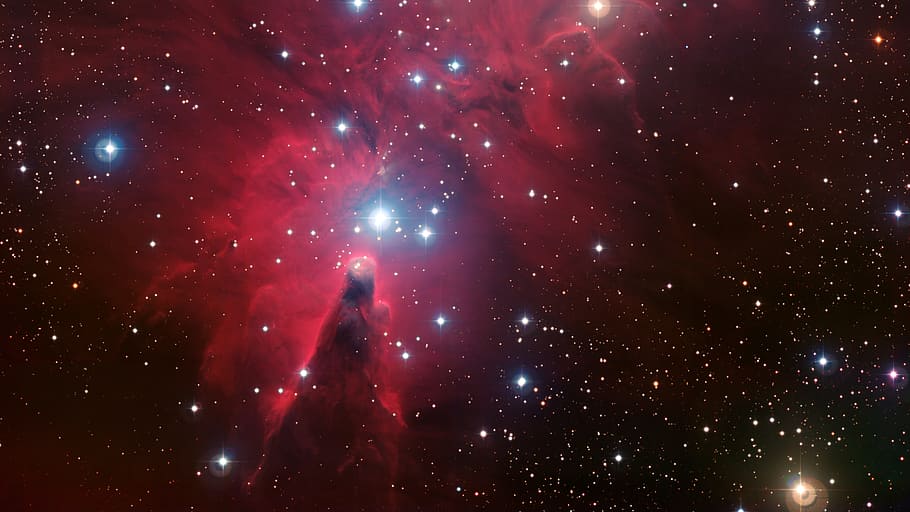
The universe our eyes can not see
Since I was a kid, when I looked at the sky, at night, I was fascinated by all the shiny little stars. For decades, astronomers have been pointing their telescopes to the sky to learn about it. But what if I told you that there is way more in the Universe than what our eyes can see?
This is not science fiction. It is what we call multimessenger astronomy and it has just opened a new window to explore the universe.
For centuries, our understanding of the universe relied on observing the light coming from stars and other objects in it. However, in recent years, we have learned to look at the sky with different eyes, using other cosmic messengers like neutrinos, gravitational waves, and cosmic rays.
Let me introduce you to this new era of multimessenger astronomy, including the unusual “telescopes” we have built in unique locations (such as the South Pole, deep underground, or under the sea) and some recent fascinating discoveries.
Kort og godt
Kan bookes i
Storkøbenhavn
Teknisk udstyr
Scree/projectorTransportudgifter
Train/metro if neededEmne
Naturvidenskab
Målgruppe
Unge (inkl. ungdomsuddannelser)
Voksne
Varighed
1 hour (adjustable)Forsker
Pablo Martinez-MiraveAnsættelsessted
Niels Bohr Institute, University of CopenhagenTitel
Dr.Kan bookes
| mandag 20/4 | ||
| formiddag | eftermiddag | aften |
| tirsdag 21/4 | ||
| formiddag | eftermiddag | aften |
| onsdag 22/4 | ||
| formiddag | eftermiddag | aften |
| torsdag 23/4 | ||
| formiddag | eftermiddag | aften |
| fredag 24/4 | ||
| formiddag | eftermiddag | aften |
| lørdag 25/4 | ||
| formiddag | eftermiddag | aften |
| søndag 26/4 | ||
| formiddag | eftermiddag | aften |