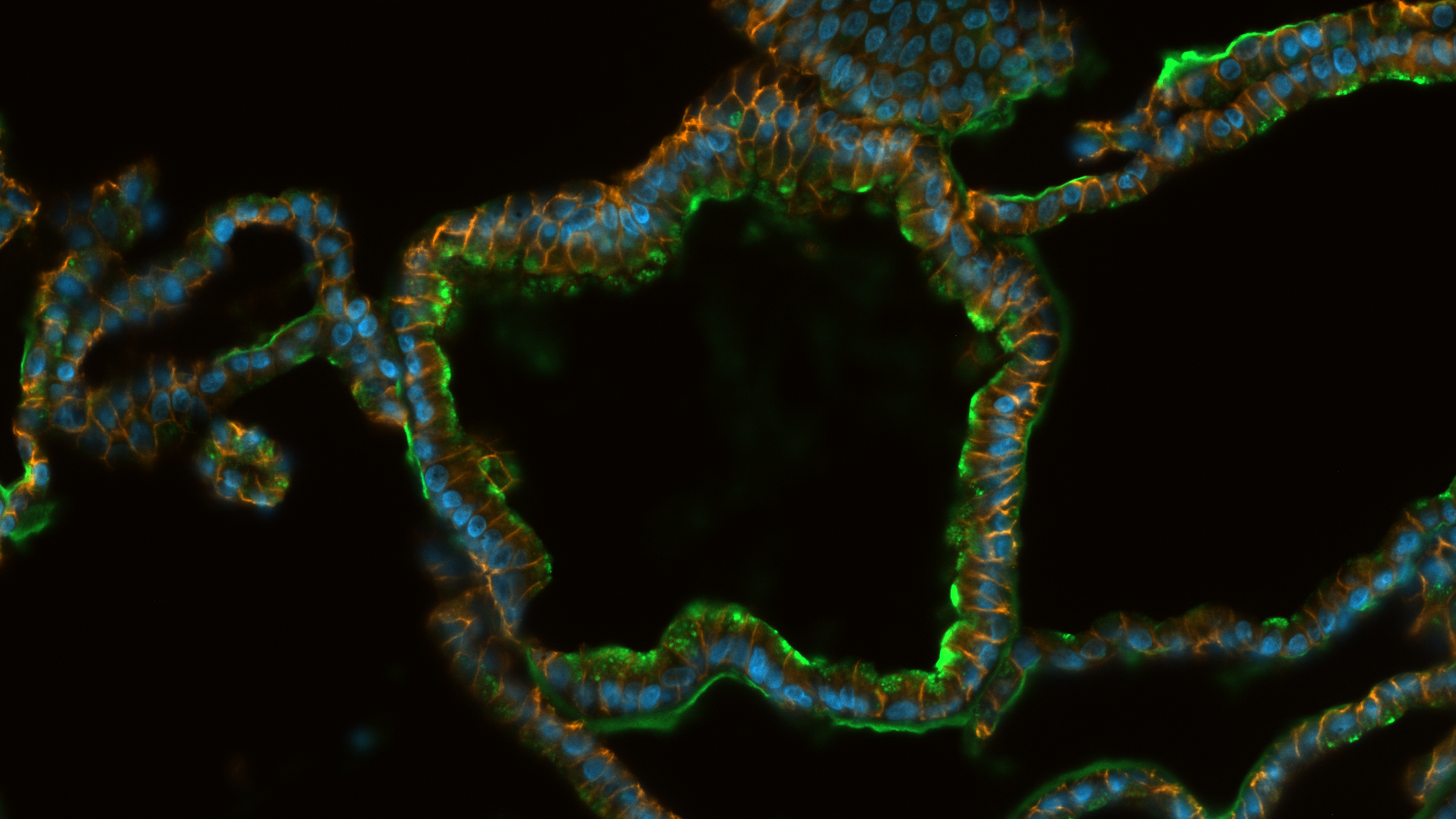
Mini-Organs Reveal the Hidden Sugar Code of the Gut
The inside of our stomach and intestines is covered by a very thin layer made of sugars. Most of us never notice it, but it is always there. This sugar layer is not the same everywhere. It differs between the stomach, small intestine, and colon, and shows that each part of our gut has a different role and its own sugar fingerprint.
In my research at the University of Copenhagen, I study this sugar layer using mini organs grown in the laboratory. These mini organs are made from small samples of human tissue and behave much like real organs. This makes it possible to compare sugar patterns from different parts of the gut.
We use several methods, such as protein analysis, to study the cells in these mini organs and the sugars they produce. When we compare them, we see clear differences between the stomach, small intestine, and colon, similar to what is seen in real human tissue.
This research shows how mini organs help scientists study a part of the gut that is normally invisible, and it also shows what these research models can and cannot tell us.
(Photo: José Pires)