Why do we move to music?
Learn how rhythm in music have a remarkable effect on our brains, bodies, and social relationships.
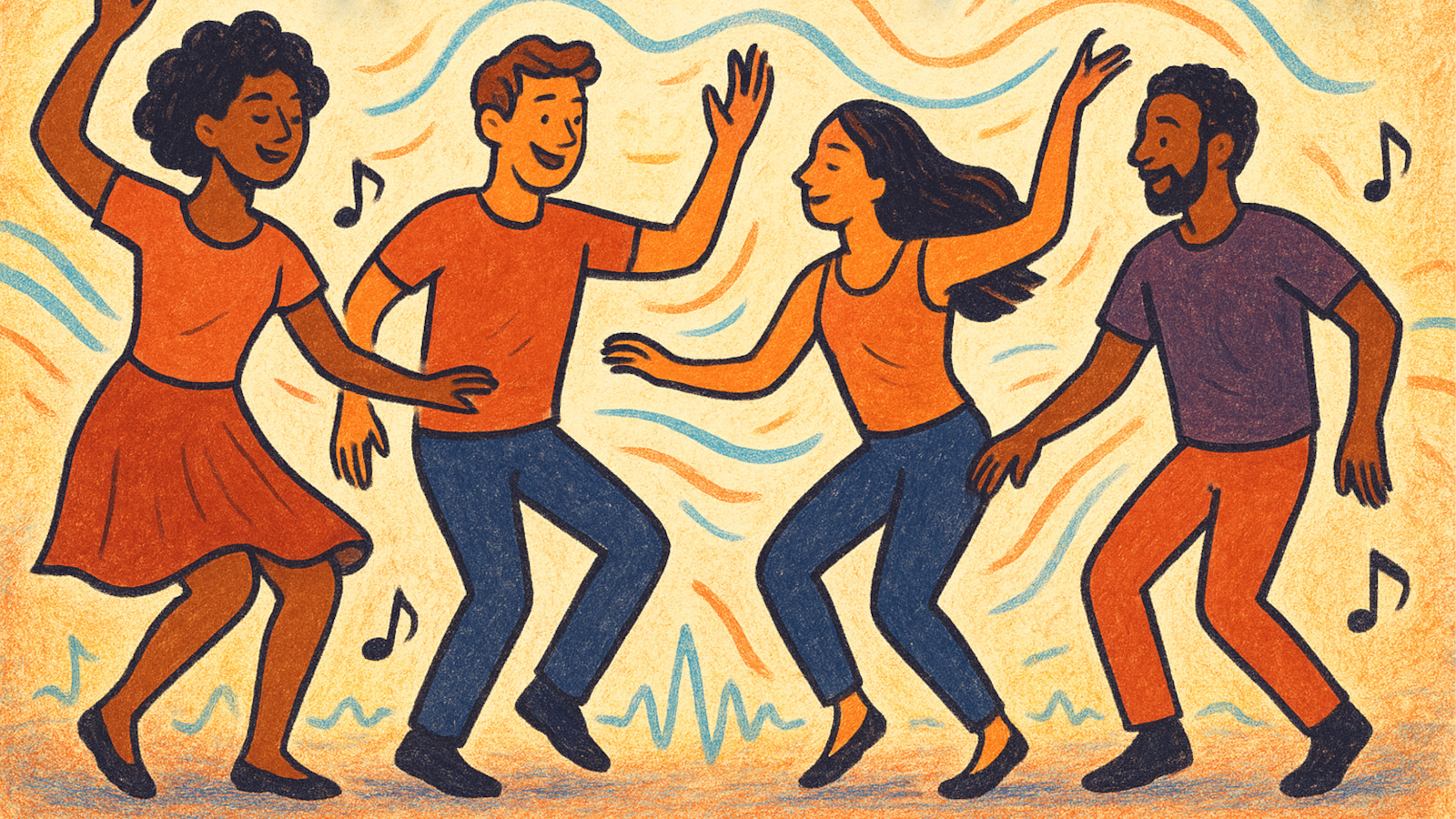
When we figure out a rhythm, it pulls us in and makes us want to move – from a subtle foot tap to energetic dancing. In music psychology, this pleasurable urge to move is called groove. The most groove-inducing rhythms hit a sweet spot: they give us a steady beat that we can predict but also add small surprises, like syncopations in swing or funk, that keep us engaged. Groove also brings people together.
Moving in synchrony, such as when dancing, can boost feelings of connection. Funkadelic captured this beautifully back in 1978 with One Nation Under a Groove, pointing to rhythm as a force for social unity and change: “With the groove our only guide, we shall all be moved.”
(AI-illustration: Jan Stupacher/ChatGPT)
Kort og godt
Kan bookes i
Teknisk udstyr
Projector and audioEmne
Målgruppe
Varighed
30-45 minutes presentation with 15-20 minutes of discussion; exact duration can be discussedForsker
Jan StupacherAnsættelsessted
Center for Music in the Brain, Aarhus UniversityTitel
Associate ProfessorKan bookes
| mandag 20/4 | ||
| formiddag | eftermiddag | aften |
|
Fysisk
Online
(Lemvig)
|
||
| tirsdag 21/4 | ||
| formiddag | eftermiddag | aften |
| onsdag 22/4 | ||
| formiddag | eftermiddag | aften |
| torsdag 23/4 | ||
| formiddag | eftermiddag | aften |
| fredag 24/4 | ||
| formiddag | eftermiddag | aften |
|
Fysisk
Online
(Aarhus)
|
||