Why We Break Tiny Bearings to Solve Big Wind Turbine Challenges
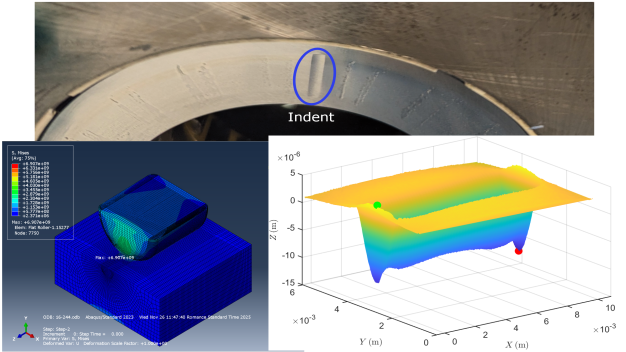
Pitch bearings might not be something you’ve heard of, but they are essential for wind turbines to work. They help turn the blades, allowing the turbine to capture wind efficiently and keep producing power. The problem is that these real bearings are huge - up to five meters wide - and extremely expensive to test directly.
In this lecture I explain how we study these issues using much smaller bearings in the lab. By applying heavy loads to the small versions, we can see how dents and damage start. Then, using computer models, we scale these results up to understand what would happen in a full-size turbine.
The goal is simple:
By learning how small bearings break, we can prevent big and costly failures in real wind turbines.
(Foto: Nikhil Sudhakaran)
Kort og godt
Kan bookes i
Teknisk udstyr
Projector for slides. I will bring the restEmne
Målgruppe
Varighed
30 minutes ( Can be longer if required)Forsker
Nikhil SudhakaranAnsættelsessted
DTU Wind and Energy SystemsTitel
PhDKan bookes
| mandag 20/4 | ||
| formiddag | eftermiddag | aften |
| tirsdag 21/4 | ||
| formiddag | eftermiddag | aften |
| onsdag 22/4 | ||
| formiddag | eftermiddag | aften |
|
Fysisk
Online
(Virum)
|
||
| torsdag 23/4 | ||
| formiddag | eftermiddag | aften |
| fredag 24/4 | ||
| formiddag | eftermiddag | aften |
| lørdag 25/4 | ||
| formiddag | eftermiddag | aften |
| søndag 26/4 | ||
| formiddag | eftermiddag | aften |